

Lusatian Granodiorite: complete guide
Lusatian Granodiorite is a fine-grained blue-grey igneous rock quarried in western Lusatia, in Saxony. It is chosen for its restrained colouring and the strength typical of granitic rocks, making it suitable even for the most exposed outdoor settings.
History and origin
Lusatia is one of Germany's historic stone areas, where granodiorite has been used for generations for kerbs, paving, steps and street furniture. Commercially it is treated as a granite, although petrographically it is a granodiorite, with less potassium feldspar. Today it is also valued for contemporary interiors with a Nordic feel. Marmi di Carrara supplies it on request.
Look and veining
The background is grey with a blue-anthracite tinge, speckled with very small, well-distributed light and dark crystals. Variation between slabs is limited, a useful characteristic for large paved areas. Polishing accentuates the bluish tone, while flaming and bush-hammering lighten the surface and make it non-slip.
Technical properties (indicative)
| Classification | granodiorite, commercially granite |
|---|---|
| Density | approx. 2,700 kg/m³ (indicative) |
| Mohs hardness | approx. 6-7 |
| Water absorption | very low |
| Main use | indoor and outdoor |
| Acid resistance | high |
Recommended uses
Suitable for outdoor floors, steps, thresholds, street furniture and façade cladding, where it withstands frost and traffic well. Indoors it works for kitchen worktops, bathroom vanity tops and high-traffic floors. Outdoors, rough finishes are preferable to avoid slippery surfaces.
Care and maintenance
Water and neutral detergents are all that is needed for cleaning; the stone is unaffected by household acids. A stain-proofing impregnator, renewed every few years, protects kitchen worktops from oils and grease.
Pairings
- brushed stainless steel and glass for modern kitchens
- light oak or ash for a Nordic feel
- white walls and pearl-grey fabrics
FAQ
What is the difference between granodiorite and granite?
Granodiorite contains more plagioclase and less potassium feldspar than granite in the strict sense; in practice their performance is similar and commercially it is classed among the granites.
Can it be used for a forecourt or a pavement?
Yes, it is a stone suited to outdoor use and to vehicle traffic if the thickness is adequate; for walkable surfaces flamed or bush-hammered finishes are recommended.
Is the blue colour noticeable?
The blue note can be seen above all on polished surfaces and in diffused light; with rough finishes the stone looks a lighter, more neutral grey.
How do I order it?
Write to us stating the format, thickness, finish and quantity: we will prepare a quotation and, on request, send photos of the available slabs or samples.
Granodiorite Della Lusazia: available on request
We supply this stone as blocks, slabs, tiles and custom-made pieces. Tell us size, thickness and quantity: we will send photos of the available slabs and a quote within 24 hours.
Similar materials

Granito Azul Do Mar
Granites · Read the guide →
Granito Caribbean Blue
Granites · Read the guide →
Petit Granit
Granites · Read the guide →
Granito Azul Extremadura
Granites · Read the guide →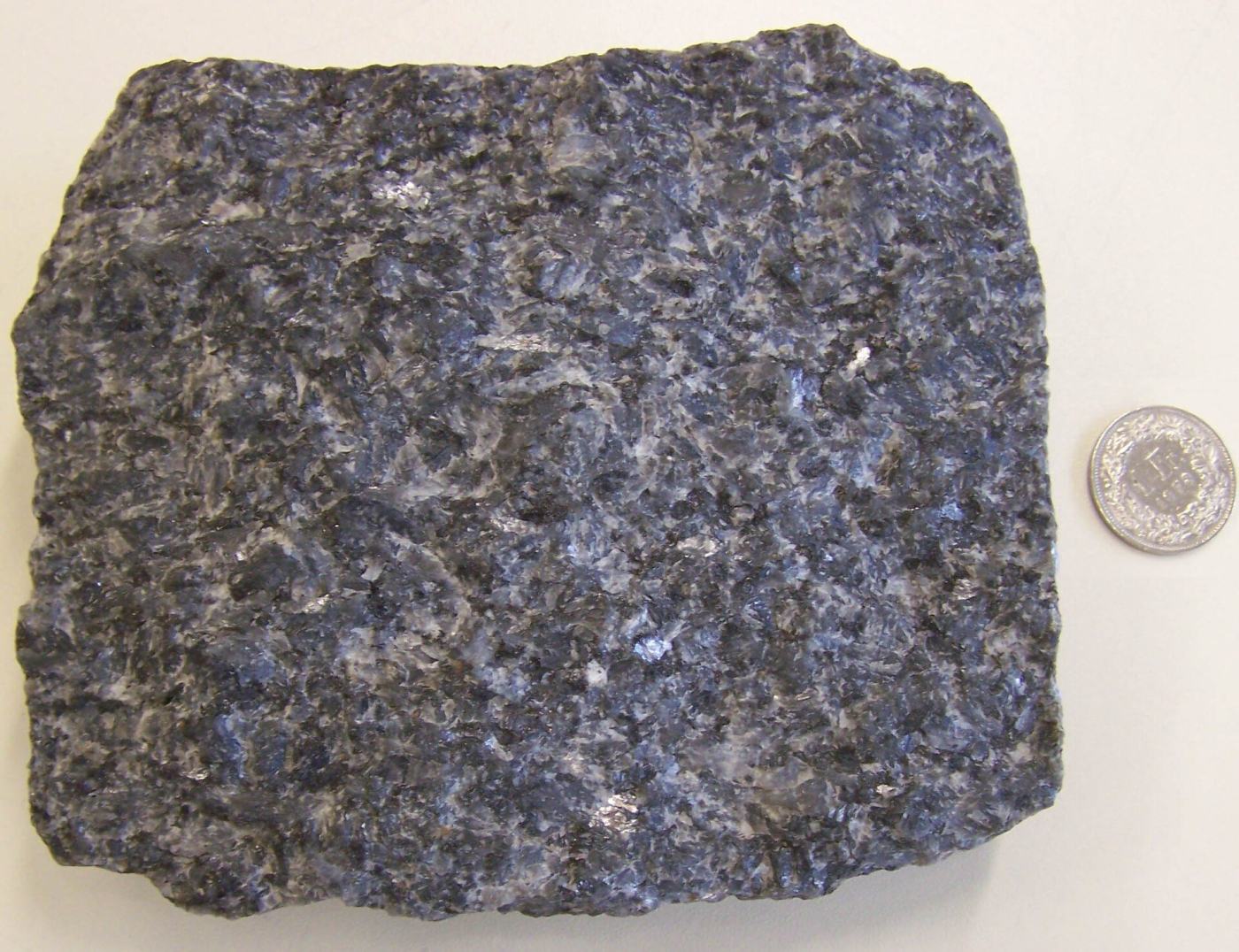
Larvikite
Granites · Read the guide →
Golden Blue
Granites · Read the guide →
Granito Lanhélin
Granites · Read the guide →