Amherst Sandstone: the complete guide
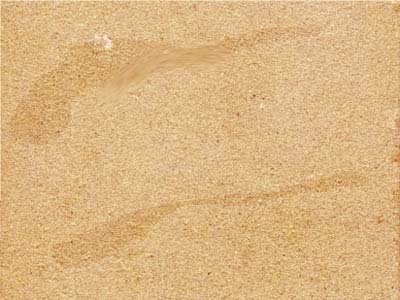
Amherst Sandstone is an American sandstone in beige and light grey tones, with a fine, even grain. It is valued for façades, cornices and architectural elements with a warm, natural look.
History and origin
The sandstones of northern Ohio were among the most widely used building stones in the United States in the nineteenth and twentieth centuries, in public and residential buildings. Amherst Sandstone takes its name from the quarrying area and is still used today in architecture and restoration. It is a stone that is easy to work and carve. Marmi di Carrara supplies it on request.
Look and veining
The colour ranges from light beige to light grey, sometimes with slight veins or streaks due to layering. The grain is fine and regular, with a matt, textured appearance. The most suitable finishes are sandblasted, brushed or split-face, which bring out its texture.
Technical properties (indicative)
| Classification | sandstone (siliciclastic sedimentary rock) |
|---|---|
| Bulk density | approx. 2,200-2,400 kg/m³ (indicative) |
| Mohs hardness | quartz grains ~7, but the stone as a whole is soft to medium |
| Water absorption | medium-high |
| Main use | exteriors and interiors, architecture |
| Acid resistance | fair, depending on the type of natural cement |
Recommended uses
It is suitable for façades, windowsills, cornices, columns, walls and outdoor pedestrian paving. Indoors it is used for fireplaces and walls. It is not recommended for kitchen worktops or surfaces prone to grease stains.
Care and maintenance
A breathable water-repellent treatment reduces water absorption and the growth of moss. Clean with water and neutral detergents, avoiding high-pressure washers. The protection may need to be renewed periodically.
Pairings
- dark-painted timber window frames
- wrought iron
- red exposed brick
FAQ
What is the difference between sandstone and limestone?
Sandstone is made of cemented sand grains (mainly quartz), whereas limestone consists chiefly of calcium carbonate.
Is it suitable for exteriors?
Yes, it has historically been a façade stone; it should be protected with breathable water repellents.
Can it be carved?
Yes, its fine, homogeneous grain makes it suitable for mouldings and decorative elements.
How do I order it?
Send us drawings or dimensions of the elements: we will prepare a quote with photos of the material and delivery times.
Arenaria Amherst: available on request
We supply this stone as blocks, slabs, tiles and custom-made pieces. Tell us size, thickness and quantity: we will send photos of the available slabs and a quote within 24 hours.
Similar materials

Pietra Amelas
Stones and limestones · Read the guide →
Ardesia Grigia
Stones and limestones · Read the guide →
Pietra Adair
Stones and limestones · Read the guide →
Pietra Serena
Stones and limestones · Read the guide →
Jura Beige
Stones and limestones · Read the guide →
Pietra Di Carniglia
Stones and limestones · Read the guide →
Peperino
Stones and limestones · Read the guide →