Honey Onyx: the complete guide
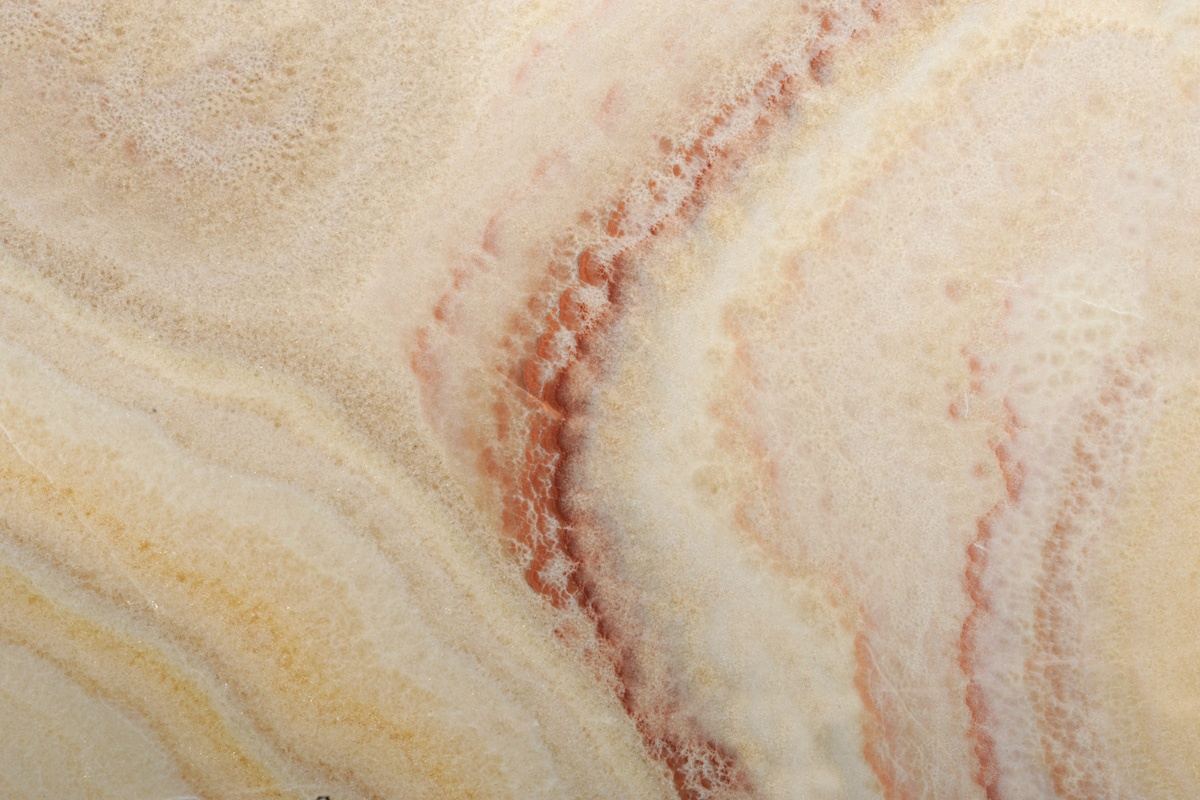
Honey Onyx is an onyx in warm honey and amber tones, crossed by overlapping bands that reveal how it formed through layering. It is chosen above all for its translucency: when backlit, it turns a wall or a counter into a surface glowing with warm light.
History and origin
Calcareous onyxes form through the slow deposition of calcium carbonate from mineral-rich waters, which explains their layered pattern. Honey-coloured varieties are widespread on the international stone market and have long been used in high-end interiors, from hotels to private residences. The origin may vary from batch to batch, so it is worth assessing the available slabs each time. Marmi di Carrara supplies it on request.
Look and veining
The background ranges from honey yellow to amber, with parallel or wavy bands in lighter and darker shades. Every slab has its own pattern and differences between blocks can be marked, which is why it is often laid bookmatched. Polishing enhances depth and transparency, while a matt honed finish reduces reflections and softens the tones.
Technical properties (indicative)
| Classification | calcareous onyx (banded calcite), translucent |
|---|---|
| Bulk density | approx. 2,700 kg/m³ (indicative) |
| Mohs hardness | approx. 3 |
| Water absorption | low |
| Main use | interiors, backlit walls and furnishings |
| Acid resistance | low: sensitive to lemon, vinegar and limescale removers |
Recommended uses
It is suitable for wall cladding, backlit panels, bar tops, reception desks, washbasins and small furnishings. Not recommended for heavy-traffic floors, exteriors or everyday kitchen worktops, where scratches and acid marks would be inevitable.
Care and maintenance
Clean with lukewarm water and a neutral detergent, drying with a soft cloth. A periodic stain-proofing treatment reduces absorption but does not protect against acid attack: drops of citrus juice, wine or limescale remover must be wiped off immediately.
Pairings
- brushed brass and bronze for taps and trims
- American walnut or dark oak
- Nero Marquina marble for sharp contrasts
FAQ
Can Honey Onyx be backlit?
Yes, it is one of the best-suited onyxes: LED lighting placed behind the slab brings out the bands with a warm effect. A thickness of about 2 cm and an even distance between slab and light source are recommended, to avoid overly bright spots.
Is it suitable for a kitchen worktop?
It is not the ideal choice: with a hardness of around 3 Mohs it scratches easily and food acids dull it. On an island it can work as a statement piece with careful use; for an everyday worktop a granite or a quartzite is better.
Why does it have a mesh on the back?
Many onyxes are supplied with a fibreglass and resin mesh on the back to compensate for their natural fragility along the bands. This is normal practice and makes the slab safer during fabrication and installation; for backlighting, a clear resin can be requested.
How do I order it?
Honey Onyx is ordered on request: tell us the dimensions, thickness and finish and we will send you a quote with photos of the available slabs, so you can choose the pattern before fabrication.
Onice Miele: available on request
We supply this stone as blocks, slabs, tiles and custom-made pieces. Tell us size, thickness and quantity: we will send photos of the available slabs and a quote within 24 hours.
Similar materials
Alabastro Egiziano
Onyx and alabaster · Read the guide →
Onice Arancio
Onyx and alabaster · Read the guide →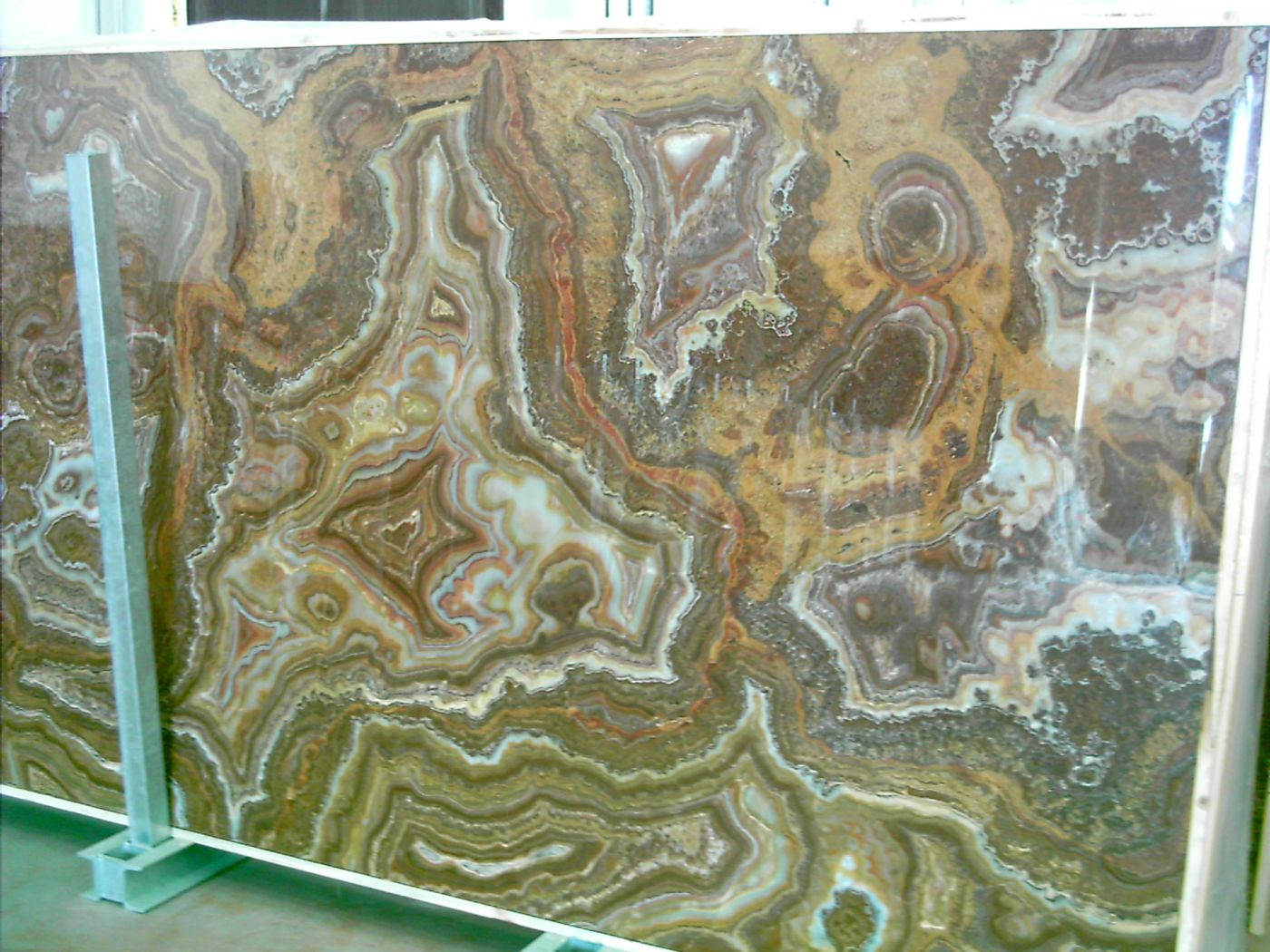
Onice Tigre (Tiger Onyx)
Onyx and alabaster · Read the guide →
Onice Demirci
Onyx and alabaster · Read the guide →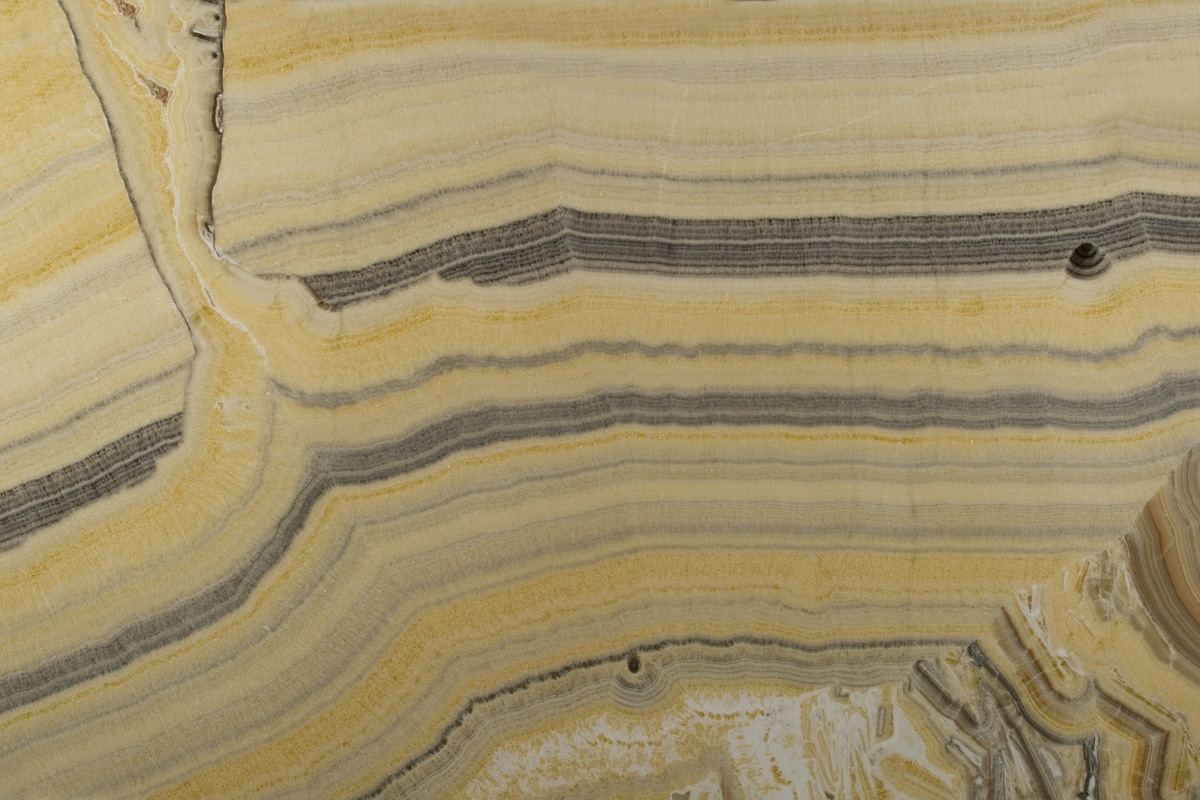
Onice Kilimangiaro
Onyx and alabaster · Read the guide →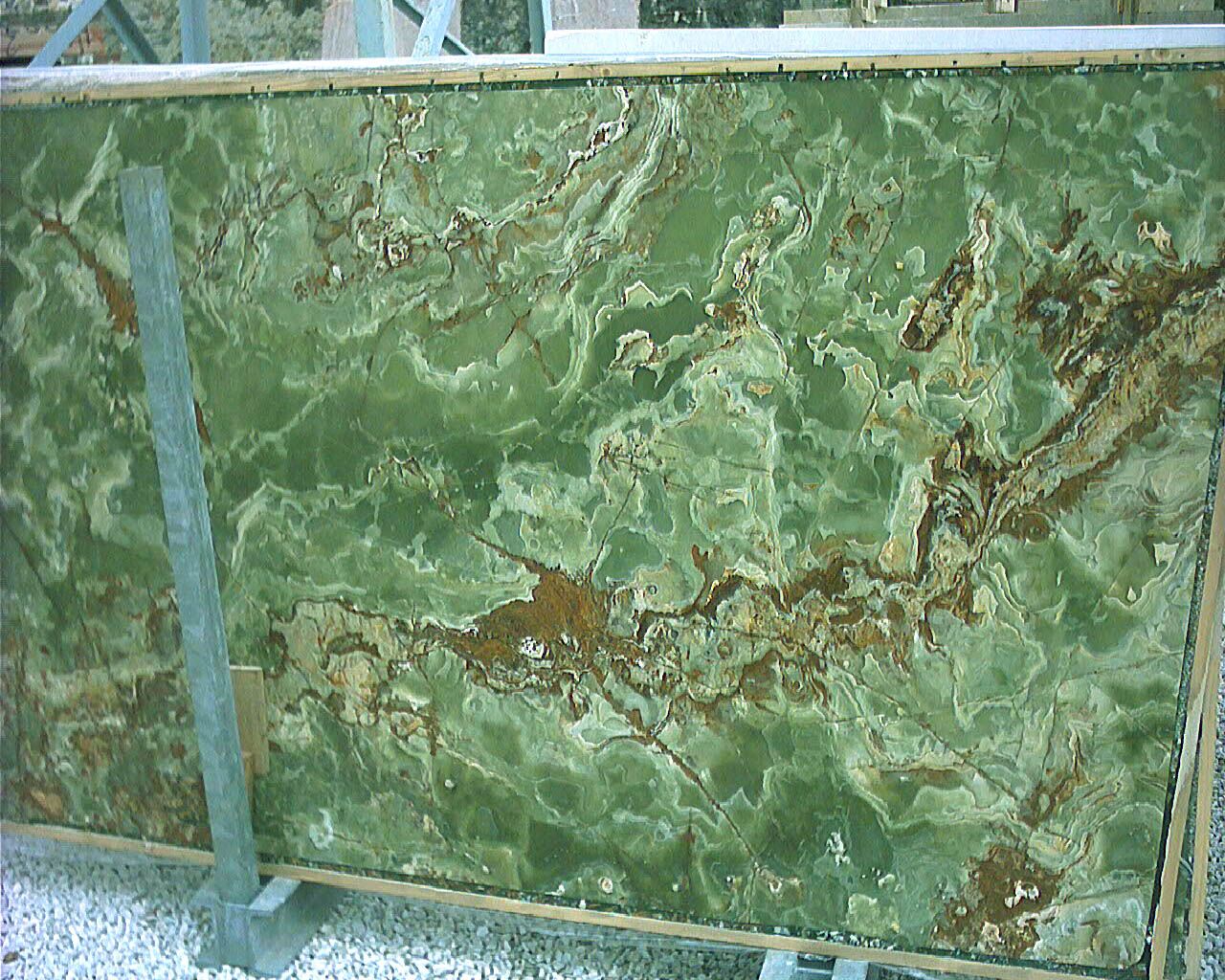
Onice Verde Scuro
Onyx and alabaster · Read the guide →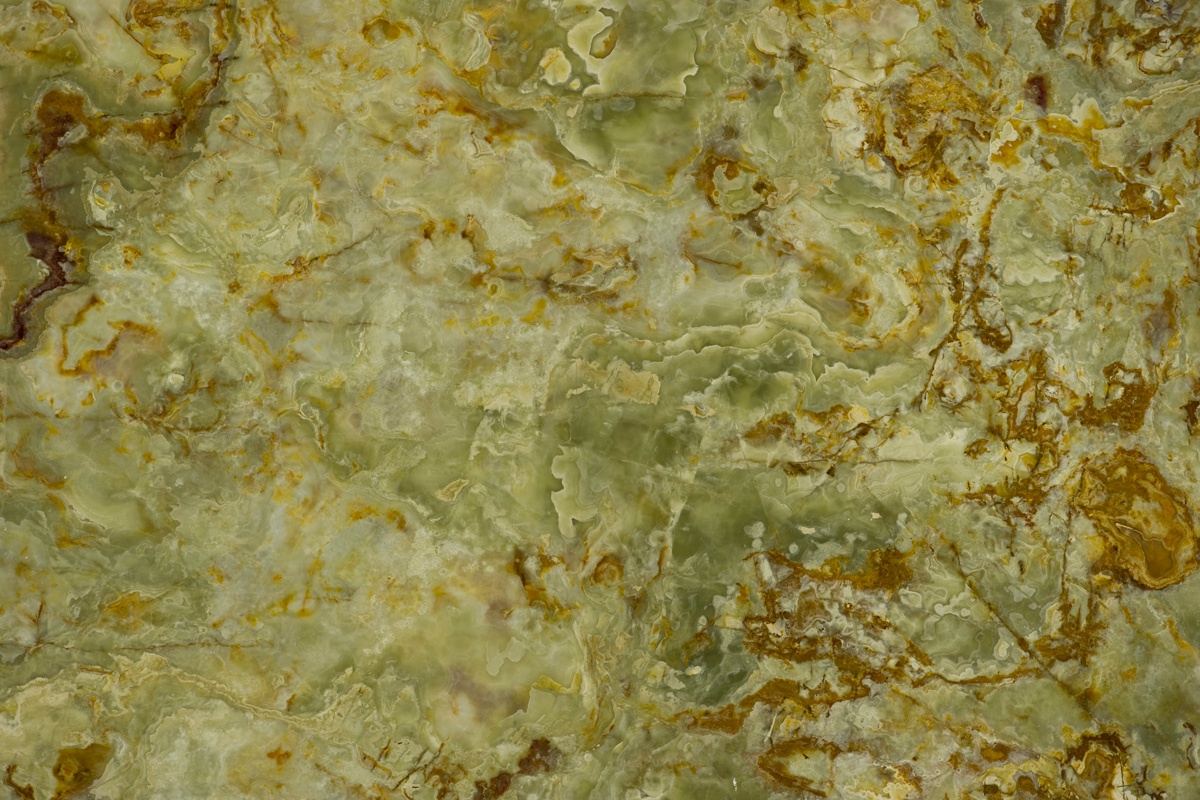
Onice Verde Pakistan
Onyx and alabaster · Read the guide →