Liscannor Stone: complete guide
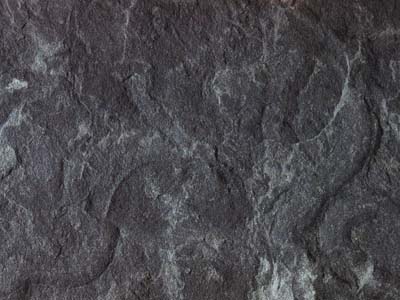
Liscannor Stone is a dark grey Irish sandstone, known for the wavy fossil traces that mark its surface. It is chosen for its unique appearance and good strength, outdoors too.
History and origin
It is quarried in County Clare, on the west coast of Ireland, where it has always been used for paving, walls, roofing and flagstones. It is a fine-grained sedimentary stone that splits naturally into slabs. The characteristic sinuous markings on the surface are traces left by ancient organisms. Marmi di Carrara supplies it on request.
Look and veining
The background is dark grey, almost anthracite, with surfaces furrowed by sinuous, irregular fossil traces. The intensity of the pattern varies greatly from slab to slab: some are almost smooth, others densely marked. The natural surface brings out the markings, while honed or brushed it looks more uniform and darker.
Technical properties (indicative)
| Classification | fine-grained sandstone / siltstone |
|---|---|
| Density | approx. 2,500-2,600 kg/m³ (indicative) |
| Mohs hardness | variable: hard siliceous grains (~7), softer matrix |
| Water absorption | low |
| Main use | indoor and outdoor paving, cladding |
| Acid resistance | generally good |
Recommended uses
It is highly suitable for outdoor paving, terraces, pool surrounds, stairs and walls, as well as interior floors with a rustic or contemporary style. Slabs with pronounced fossil traces are also popular for wall and fireplace cladding.
Care and maintenance
Clean with water and neutral detergents; outdoors, a water-repellent treatment can be useful to limit moss and stains. Avoid aggressive de-icing salts.
Pairings
- larch or iroko decking
- Corten steel
- light gravel and planting in gardens
FAQ
Do the fossil traces make the surface uneven?
The markings create a slight relief that improves grip outdoors; for interiors, smoother surfaces can be chosen.
Can it be used around a swimming pool?
Yes, it is a popular choice for pool surrounds and sun terraces thanks to its naturally non-slip surface; a water-repellent protector is recommended.
Do all slabs have fossil traces?
No, the intensity varies greatly. If the pattern is important for the project, it is best to select the slabs from photos.
How can I order it?
Contact us with the area, formats and finish required: we will reply with a quotation on request and photos of the slabs, which also help you choose the intensity of the fossil traces.
Pietra Di Liscannor: available on request
We supply this stone as blocks, slabs, tiles and custom-made pieces. Tell us size, thickness and quantity: we will send photos of the available slabs and a quote within 24 hours.
Similar materials
Scisto Maculato Di Theuma
Stones and limestones · Read the guide →
Pietra Amelas
Stones and limestones · Read the guide →
Peperino
Stones and limestones · Read the guide →
Indiana Limestone
Stones and limestones · Read the guide →
Pietra Adair
Stones and limestones · Read the guide →
Jura Beige
Stones and limestones · Read the guide →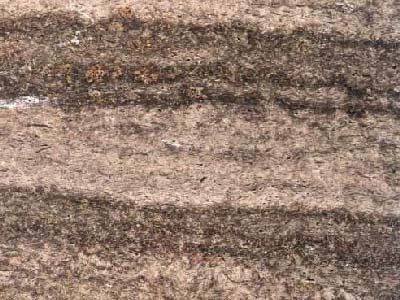
Muschelkalk Di Krensheim
Stones and limestones · Read the guide →